
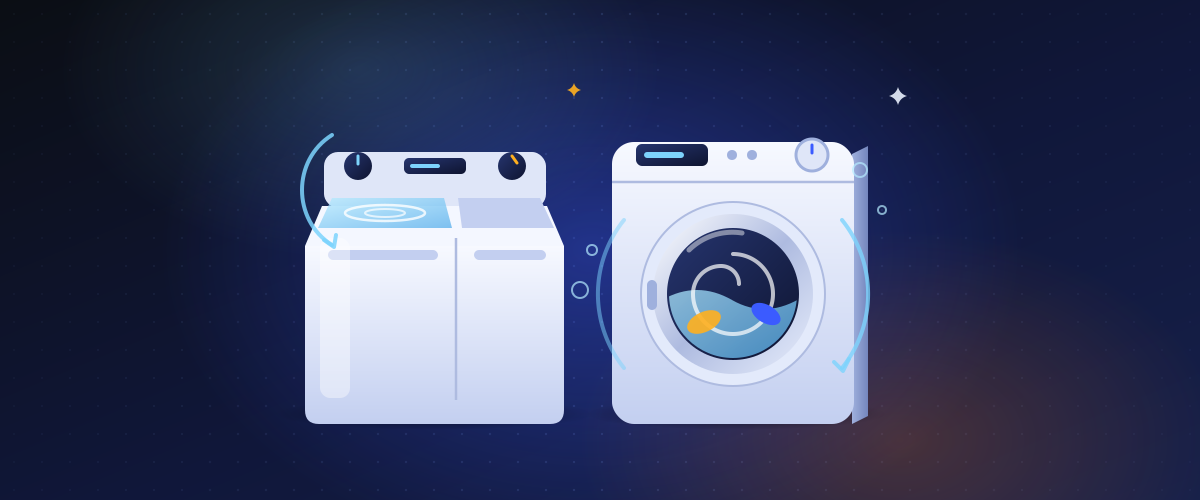
The short answer
Buy a semi-automatic washing machine if water comes at fixed hours, you want the lowest price, or you wash heavy loads and want to reuse water; it typically costs about 40% less than a fully automatic of the same size. Buy a fully automatic if you have a steady water supply and want to load the clothes and walk away. Both clean well; the difference is how much work you do and how much you pay.
01
Semi automatic vs fully automatic: side by side
| Semi-automatic | Fully automatic | |
|---|---|---|
| Price for the same capacity | Lower, often about 40% less | Higher |
| Water supply | Fill by bucket or hose; no steady tap needed | Needs a tap with steady water pressure |
| Your effort | Move clothes from wash tub to spin tub | Load once; it washes, rinses and spins |
| Water use | Lower, and wash water can be reused | Higher, set by the programme |
| Time | Wash and spin two loads at once | One load at a time, 45–90 minutes |
| Best for | Irregular water, budget, heavy loads | Busy homes with steady water |
02
Who should buy a semi-automatic
- Homes where water comes at fixed hours or the tap pressure is low
- Families that want the most capacity for the money
- Anyone who washes bedsheets, blankets and work clothes often and likes to reuse the wash water
- Homes without a fixed spot next to a tap and drain for the machine
03
Which size do you need?
Capacity is the weight of dry clothes per load. A slightly larger machine lets you wash heavy items like blankets without splitting the load.
| Household | Suggested capacity |
|---|---|
| 1–2 people | 6–7 kg |
| 3–4 people | 7–7.5 kg |
| 5 or more, or bedsheets and blankets often | 8 kg and above |


