
The short answer
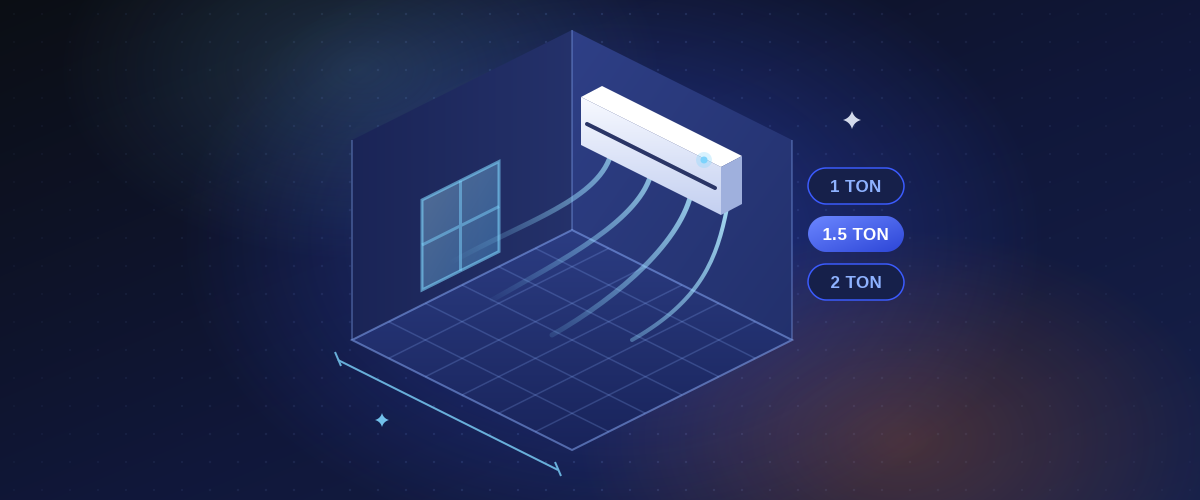
As a rule of thumb for Indian summers: a 1 ton AC suits rooms up to about 120 sq ft, 1.5 ton suits 120–180 sq ft, and 2 ton suits 180–250 sq ft. Go one size up for a top-floor room, a room with strong afternoon sun, high ceilings, or several people using it regularly.
What each size costs to run
A bigger AC draws more power, so size it to the room rather than going large "to be safe". Estimated for an inverter split AC running 8 hours a night for 30 days at about ₹7 a unit:
| AC | Units a month (8 h a night) | Approx. bill at ₹7/unit |
|---|---|---|
| 1 ton 3 star inverter | 180 units | ₹1,260 |
| 1 ton 5 star inverter | 144 units | ₹1,010 |
| 1.5 ton 3 star inverter | 264 units | ₹1,850 |
| 1.5 ton 5 star inverter | 216 units | ₹1,510 |
| 2 ton 3 star inverter | 348 units | ₹2,440 |
| 2 ton 5 star inverter | 288 units | ₹2,020 |
Room size is the starting point
Measure the floor length and width in feet and multiply them. A 10 × 12 ft bedroom is 120 sq ft; a 12 × 15 ft living room is 180 sq ft. Cooling need grows with the area, so this number gets you to the right tonnage band.
| Room area | Typical room | Suggested AC |
|---|---|---|
| Up to 120 sq ft | Small bedroom, study | 1 ton |
| 120–180 sq ft | Bedroom, small living room | 1.5 ton |
| 180–250 sq ft | Living room, hall | 2 ton |
| Above 250 sq ft | Large hall, shop | Two ACs, or ask us |
When to go one size up
Heat that enters the room matters as much as its size. The same 150 sq ft room can need a 1.5 ton AC on a shaded lower floor and a 2 ton AC under a sun-baked roof.
- Top floor or directly under a roof or terrace
- West-facing walls or large windows that get afternoon sun
- Ceilings higher than about 10 ft
- Three or more people in the room for long hours
- A kitchen or other heat source opening into the room
What goes wrong with the wrong size
An undersized AC runs flat out and still leaves the room warm on the hottest afternoons, and its compressor works harder than it should. An oversized AC cools the air quickly but switches off before it removes humidity, so the room feels cold and damp, and you pay more up front for no benefit.
Inverter ACs soften both problems because they adjust their speed, but the right size still matters most.


